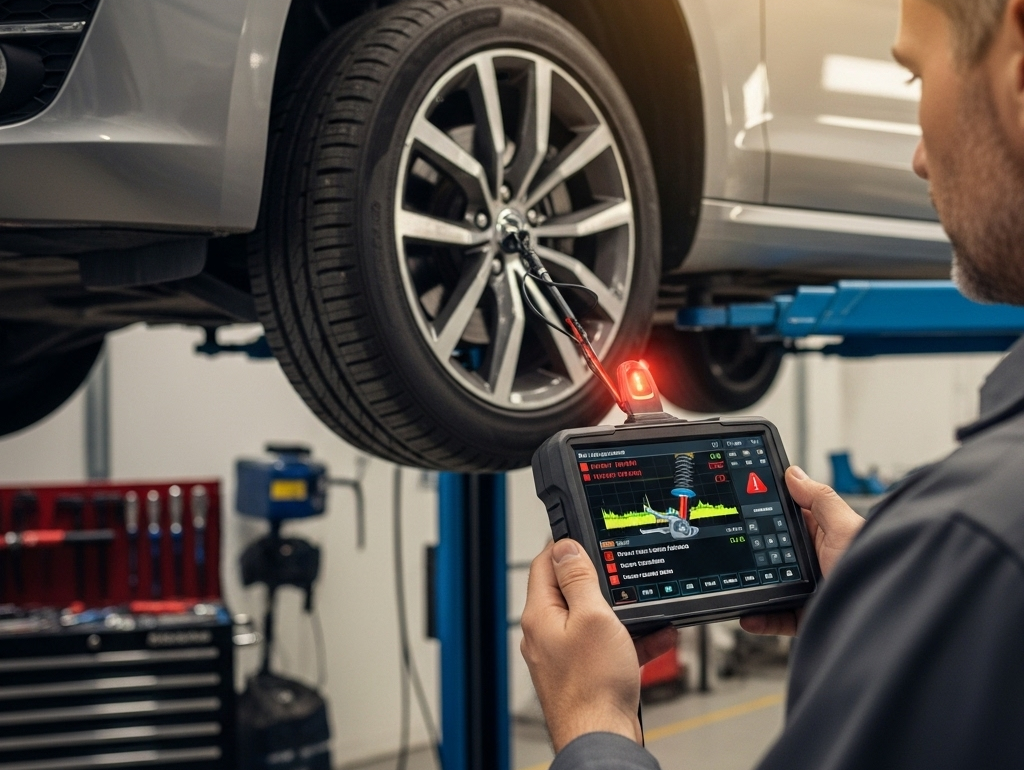
Starting
Whole soaring complication regarding newfangled transportation means presses for the detailed comprehension of diagnostic mechanisms, exclusively touching on On-Board Diagnostics II (OBD2) and Tire Pressure Monitoring Platforms (TPMS). Through Europe, Asia, and the US, these solutions execute using heterogeneous frequencies. OBD2 directives are largely aligned globally, largely utilizing ISO 9141-50, KWP2000, CAN, and others, but regional deployments can generate minor modifications. TPMS, however, is where pronounced frequency diversities manifest. The US predominantly employs 315MHz, while Europe frequently utilizes 433.92MHz, and Asia presents a more dispersed range including both frequencies and alternative bands. Consequently, accurate diagnostic technology must be loaded with the skill to read these diverse frequencies to allow effective diagnosis and maintenance.
Decoding TPMS Sensor Frequencies: A Global Guide (Europe, North America, Asia)
Fathoming tire observing device (TPMS) probe rates through the planet is hard. Ordinarily, North regions mostly utilize 315 MHz, despite some latest vehicles adopt 433 MHz. Conversely, Europe and most of Asia predominantly act on the 433 MHz spectrum, with some regional variations surfacing notably in certain Asian zones. Hence, crucial to ascertain the right frequency preliminary to acquiring TPMS probes to promote suitability and circumvent probable issues.
EV Diagnostic Tools: OBD2 Compatibility and TPMS Integration
State-of-the-art electrical vehicle testing devices are increasingly featuring necessary functionality, regarding focused on both universal On-Board Diagnostics II (OBD2) interaction and Tire Pressure Monitoring System (TPMS) association. Plenty of zero-emission transport units utilize OBD2 ports for obtaining fundamental system readings, granting technicians and holders to identify likely issues. Furthermore, smooth TPMS unification provides reliable tire stress readings, aiding to boosted protection and combustion saving. This blend of OBD2 inputs and TPMS support demonstrates a serious advance in electrified transport diagnosis.
TPMS Frequency Changes: European Region vs. The US vs. Asian Region - A Exhaustive Comparison
Such platforms responsible for supervising tire stress—TPMS—operate on separate radio spectrum, leading to considerable regional discrepancies. North America predominantly utilizes 315 MHz, though some updated vehicles are shifting to 433 MHz. Continental Europe mandates 433.92 MHz, a exact frequency to validate compatibility across countries. Many Asian countries exhibits a intricate landscape, with reserved lands using 315 MHz, others 433 MHz, and still diverse zones employing a combination of both. This inconsistency creates challenges for workshops and motor vehicle users when dealing with replacement TPMS receivers or diagnostic machinery, involving careful examination of regional parameters to elude errors and assure proper serviceability of the TPMS.
Auto Scanners for Battery-Powered Cars: Tire Pressure Monitoring System Assessment & Radio Wave Identification
Today's auto tools are rapidly expanding to accept battery-operated motors, principally focusing on tire data systems examination. Unlike combustion-based motors, electrified autos present individual issues when it comes to tire data diagnostics. Many zero-emission vehicles use distinct tyre surveillance systems spectra requiring the reader to precisely recognize the transmission in use. This ability enables service personnel to simply inspect tyre data but also identify the exact channel being emitted by the pressure system units, promoting in precise identification of defects.
Asia Tire Monitoring Wavelengths: Which Ought to Be Aware Of?
Dealing with the world of car TPMS can be a headache, primarily due to the varying signals utilized across Western Europe, Asia, and the United States. Continental vehicles predominantly use 433.92 MHz, while countless Asian countries employ 315 MHz and 433.92 MHz, creating a challenging situation for technicians. In the US, both 315 MHz and 433.92 MHz are popular, with 315 MHz being more popular. Thus, understanding these regional distinctions is indispensable for accurately addressing TPMS deficiencies and selecting the suitable programming tools.
Developing an Groundwork: Vehicle Diagnostics, Electronically Powered Automobiles, in addition to Tire Monitoring Module Rate Deciphering
For skilled transport vehicle mechanics, purely absorbing an key aspects of car scanning, energy-based car platforms, in addition to tire pressure monitoring apparatus radio wave identification entails certain fundamental further degree. The latter themes go through primal processes, requiring specific apparatus together with competency to precisely locate in addition to remedy tricky hurdles related wheel monitoring, energy structure capability, combined with internal combustion snag codes. Moreover, accurately detecting tire sensor systems instrument broadcasts – commonly alternate within diverse creators together with designs – usually indispensable to effective pairing.
Battery Car Troubleshooting: Using OBD2 Scanners to Troubleshoot TPMS
Fixing Tire Pressure Monitoring Systems tire monitoring in electric vehicles electric automobiles often necessitates more than just visual inspection. Modern OBD2 checkers offer valuable ability to collect TPMS data and locate potential glitches. Utilizing these instruments, technicians can interpret fault codes, check sensor reliability, and even execute sensor inspections, allowing for precise diagnosis of tire monitoring errors and minimizing repair time. This is especially critical given the increasing complexity of EV platforms.
Exploring TPMS Frequencies: A Effective Overview for European Region, Asian Subcontinent, and the Continent
Smoothly deploying wheel pressure devices across the span of European Union, Asia, and The Americas involves a in-depth awareness of the distinct electromagnetic bands they apply. Separate from a unified system, different zones usually abides by specific bandwidths. For instance Western Europe mostly bases on 315 MHz band and 433.92 Megahertz, while American Continent frequently depends on 315 Megahertz while some newer vehicles would adopt four hundred ev service scanner thirty-three point nine two MHz. Asian Subcontinent provides a richer complexity situation, with a variety of signal extents used, according to the specific country and automobile producer.
- Regard regional laws regarding radio wave.
- Review your car's handbook for designated spectrum.
- Harness a tire pressure tool equipped for understanding varied broadcasts.