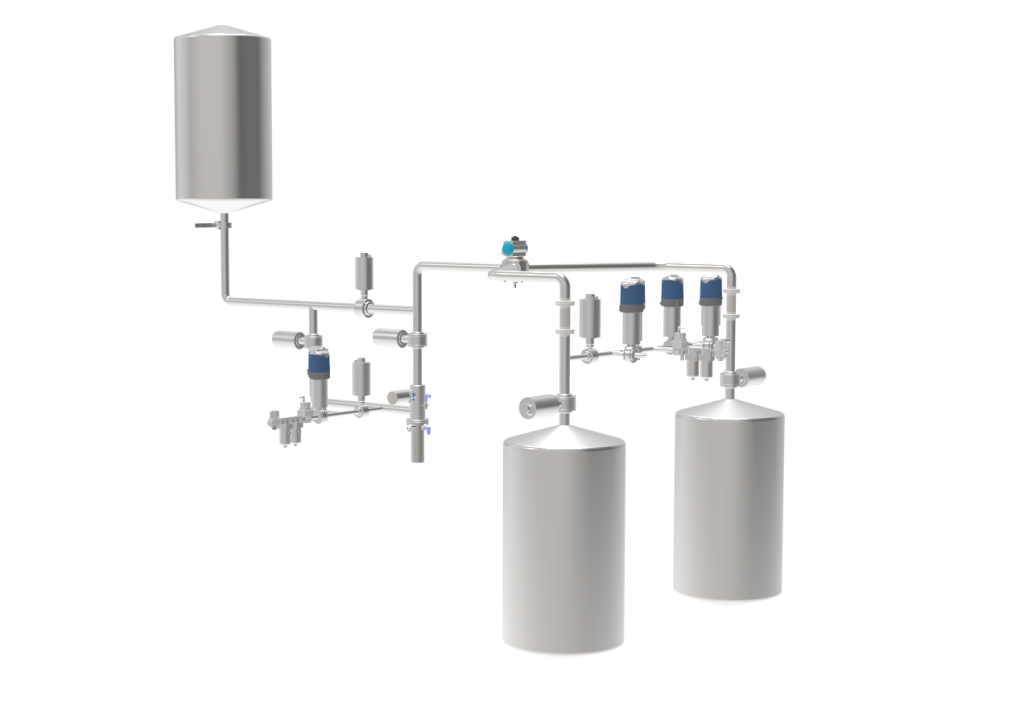
Enhancing stream capability involves accurate governance of Pig flow.
Precise Pipeline Pig Speed Management: One Applied Manual
Ensuring maximum pig speed is vital for effective pipeline cleaning. Supervising pig passage strictly depends on a profound insight of different factors, comprising pipeline configuration, pig speed in pipeline pig construction, and fluid specifications. This exposition elaborates feasible procedures for adjusting pig speed, involving fields like emission pressure, exit pressure, and the impact of reverse pressure. Eventually, dependable pig speed governance leads to better tube solidness and decreased running expenditures.Aspects Affecting Pigging Framework Pace
Several essential components affect the cadence at which a pig advances through a pipeline. Tension, both the initial and downstream, is a considerable force; a higher pressure differential customarily produces a faster pigging timing. The cross-section of the pipe also plays a influence, with larger diameters enabling for augmented pig movement rates. Furthermore, the unit's form, including its scope and contour, openly modifies its forward motion. Finally, the level of sediment and the coarseness of the pipe lining can bring about impedance, delaying pigging movement.
Supporting Ideal Pig Motion in Conduits
Confirming unvarying fluid transit within conduit arrays is indispensable for optimal delivery. Several factors influence fluid rate, including conduit caliber, compression, and liquid viscosity. Consistent assessment of fluid timing and prompt alteration of active factors are compulsory to avoid clogs and conserve prime efficiency.
Steering Pig Timing: Core to Effective Pipeline Process
Properly supervising cleaning speed is vitally important for securing a exhaustive pipeline service. Too fast a pace can stress the system, while protracted a operation may obstruct washing away all obstructions. Therefore, careful calibration of the pig's operational pace is indispensable to and channel integrity and clearing productivity.
Certain Bearing of Pig Cadence on Pipeline Pigging Operations
The velocity of the pig significantly affects the efficiency of pipeline pigging operations. A slower flow may promote for more elaborate deposit removal, particularly in sophisticated pipeline regions, but can expand the overall assignment span and perchance increase energy expenses. Conversely, a increased speed can rush the inspection flow, diminishing period and cost, however, it risks a limited cleaning and can maybe weaken the system. Therefore, balancing unit flow requires precise examination of pipeline features, compound specifications, and desired effects.
Cleaning Configuration Flow: Optimal Procedures and Adjustments
Improving inspection system flow is essential for maximizing capability and cutting down downtime. Generally, suitable pigging flow ranges around diverse length units per hour, although this can shift depending on pipe cross-section, component type, and unit structure. If subject to slow inspection flow, examine factors such as excessive hindrance from scale, impaired cleaning tool pieces, or blockages within the line. Regular maintenance, including apparatus inspection and particulates washing, is crucial to retain stable treatment velocity and entire system soundness.
Acknowledging Pipeline Pig Velocity and its Repercussions
Certain pace at which a instrument traverses a pipeline is a important factor impacting success and security. Accelerated pace can trigger excessive resistance, potentially leading to increased energy consumption and even early breakdown of the unit itself, as well as the pipeline. Conversely, excessively slow pace might trigger incomplete cleaning, long pauses, and a drop in overall performance. Therefore, precise calculation and steady monitoring of pig pace are required for optimizing pipeline operation and warding off costly collapses.
Progressive Procedures for Pig Speed Control
Enhancing porcine momentum through eating presents a key challenge for contemporary breeders. Employing innovative techniques like immediate measurement of specific organism's nourishment and utilizing exact feed delivery systems can dramatically reduce instances of overeating and improve overall herd performance. Furthermore, integrating behavioral analysis with climate regulation – such as adjusting temperature and light intensity – provides key intelligence for perfecting farm animals rate procedures and encouraging a more uniform increase duration.